Why do you need a Fleet Management System? Ask any Indian fleet manager what keeps them up at night, and you’ll hear a familiar list: delayed shipments, endless maintenance issues, driver attrition, rising fuel costs, and compliance paperwork that never ends.
Add to that vehicle wait times, unpaid demurrage charges, growing customer expectations, and razor-thin margins, and you’ve got a logistics puzzle that’s only getting harder to solve.
But the real question isn’t what keeps them awake. It’s why they’re still managing all this manually in 2025?
Let’s walk through a typical day of a fleet ops head, someone just like you, and explore how the right digital fleet management system could turn things around.
Vehicle Shortage & Breakdowns
It’s 6:30 AM. Three vehicles are supposed to be dispatched from your Bhiwandi warehouse by 7. But one driver calls in sick, another truck’s battery has given up, and a third is missing papers for a RTO checkpoint near Vapi.
You scramble to reshuffle assets, call your mechanics, and search WhatsApp groups for a backup driver. Operations are already delayed.
What could’ve helped?
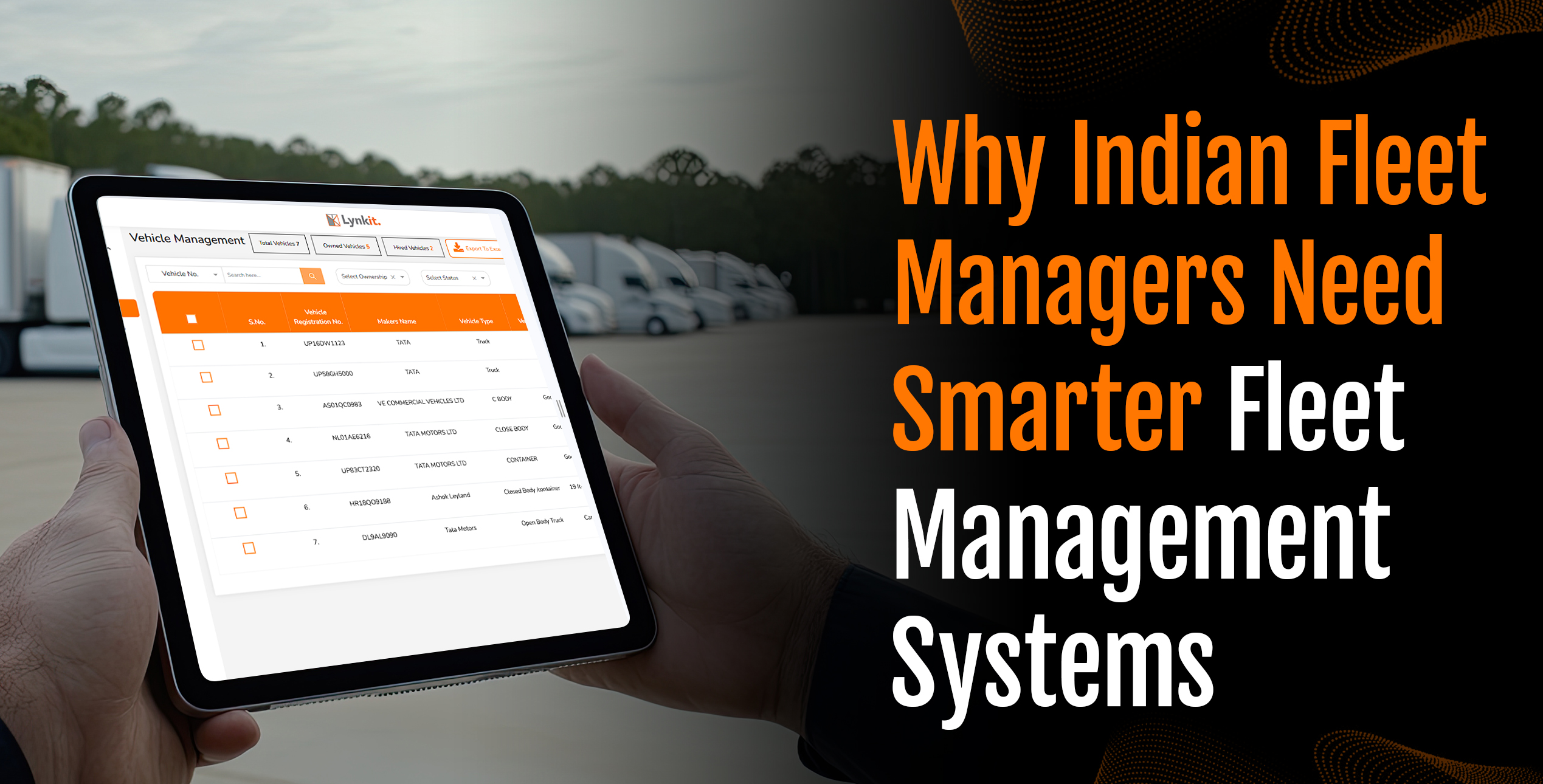
A fleet management system that tracks vehicle health in real time, alerts you in advance about maintenance needs, and ensures all documents are digitally stored and accessible. No more “sir woh file toh truck mein hi reh gayi.” It streamlines vehicle management and avoids last-minute chaos.
Compliance
Between state permits, PUC, insurance renewals, and mandatory driver rest log compliance, in India, compliance is a full-time job. And if you’re still relying on Excel sheets or someone’s memory, something’s going to slip.
We’ve seen it happen. One missed FC certificate resulted in a ₹10,000 fine during a border check in Punjab. Worse, the shipment was stuck for hours, killing your SLA and damaging client trust.
What changes with digital compliance?
Fleet management systems automate renewal reminders, store documents centrally, and even integrate with Vahan and Saarthi systems to streamline movement. No more panic at checkpoints. You receive a compliant and efficient vehicle management system.
Your Drivers
In a fleet of 100, you might be lucky if 60 are well-trained, and 10 follow safety protocols properly.
Driver misbehavior, speeding, hard braking, and sudden lane changes aren’t just risky; they’re expensive. And let’s not forget the mental toll on drivers running 14-hour shifts between Delhi and Kanpur without proper breaks or motivation.
What helps here?
Telematics. In-cabin monitoring with AI-based alerts. Real-time feedback on driving behavior. Platforms like SARATHI, introduced by the Ministry of Road Transport and Highways for streamlining the issuance of driving licenses, help formalize driver records and certifications. Combined with intelligent fleet systems, this results in fewer accidents, better compliance, and enhanced driver morale.
Maintenance Delays
One fleet operator in Nagpur shared how a ₹400 faulty fan belt caused the truck engine to overheat and stall mid-route. The result? A missed delivery deadline, ₹80,000 in penalties, and a lost contract.
Why? Because they were reactive rather than proactive.
How does that change?
Preventive maintenance schedules powered by IoT sensors. Automated part ordering. Visibility of upcoming repair needs before breakdowns occur. Regular tyre management becomes critical here, as tyres wear out quickly, and tracking usage, retreading schedules, and replacements can’t be done manually. With RFID-based tyre tracking, you know which tyres are too worn out and which ones are due for replacement or retreading – no guesswork, no risks.
With Lynkit’s integrated vehicle management system, even your procurement team knows which spare parts and tyres to stock, and when. Thanks to built-in schedulers and automated alerts in our Transport Management System (TMS), you receive timely reminders based on kilometers traveled, ensuring nothing slips through the cracks.
Fuel Prices & Pilferage
In a time when diesel touches ₹90+ per litre in some states, even 5% wastage is a huge dent. Fuel cards get misused. Idling during long halts burns liters unnecessarily.
What fixes this?
Fuel monitoring systems that track consumption detect abnormal drops and flag misuse. Combine this with fleet tracking, route optimization, and petrol/diesel/CNG price APIs to know which city or state has cheaper fuel costs, so you know precisely where to top up. You’re not just saving fuel, you’re saving sanity.
Data Overload
You might be collecting GPS data, fuel logs, and service reports, but it’s just noise without context.
What you need is insight.
Fleet management systems, like Lynkit’s, utilize smart dashboards and alerts to inform you of what matters. “These 3 trucks need tyre rotation,” “This driver is habitually braking hard,” “These routes have delivery delays due to toll congestion.” You get clarity. Your decisions get sharper. This is modern fleet tracking at work.
Also Read:
A Guide to Pilferage Free Transportation – Benefits of Digital GPS Locks in Logistics!
GPS Locks & GPS Trackers Are Fundamental For Your Vehicles and Fleets. Here’s Why!
Swift Scaling
Whether you’re expanding to 5 new cities or onboarding 50 new vehicles, you need systems that grow with you, not more people, more paperwork, or more WhatsApp chaos.
An integrated fleet management system helps you scale confidently without compromising visibility into your vehicle and driver management practices.
So then, why are fleet managers still holding back?
We get it. Digital transformation sounds heavy. It feels expensive. You’ve got teams that resist change, and tech that feels too complex.
But here’s the truth: doing nothing costs more.
Every breakdown, fine, fuel leak, theft, and delivery delay is money left on the table. And in an industry where margins are razor-thin, that adds up fast.
The Way Forward: Smarter Fleets, Happier Teams
Lynkit’s fleet management system is designed for Indian logistics realities, not just theory. From preventive maintenance and compliance to driver management, safety, and cold chain monitoring, it encompasses all the key aspects.
So the next time you’re firefighting a last-minute vehicle breakdown or explaining a missed SLA, ask yourself: Would this still be a problem if we had the right system in place?
Because the answer, more often than not, is NO!
Ready to put your fleet on autopilot (the smart kind)? Get in touch with us and see how we can help you build a fleet management system that works with you, not against you.