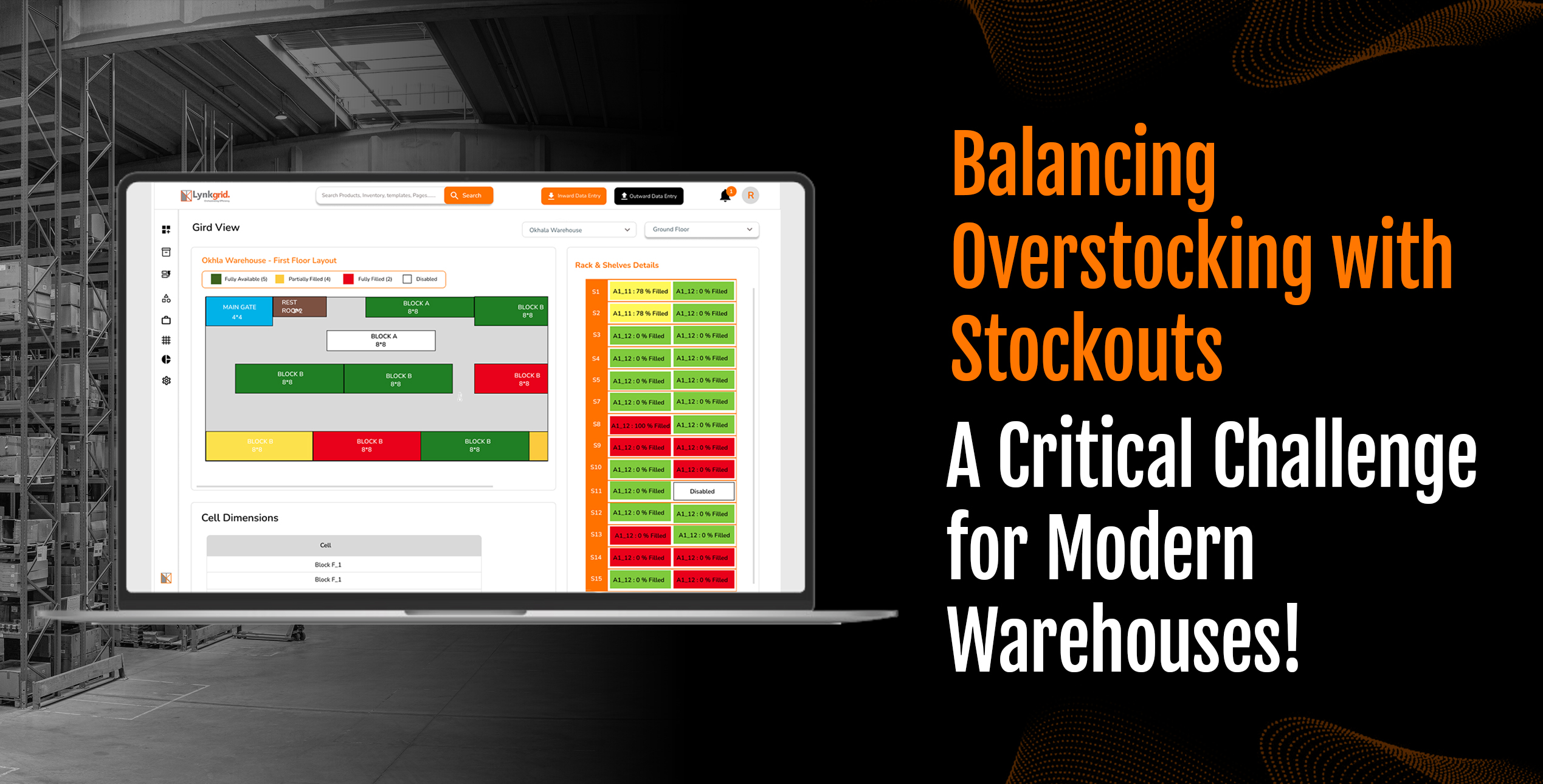
Maintaining the balance between overstocking and stockouts remains one of the most pressing challenges when discussing inventory management, with a simple solution: A Warehouse Management System! Both scenarios can significantly disrupt operations, inflate costs, and reduce customer trust.
This blog dives into the nuances of this challenge and explores how leveraging a robust Warehouse Management System (WMS) can help businesses strike the perfect balance.
Stat to Ponder: Inventory distortions resulted in a staggering $818 billion loss in a year, with out-of-stock items responsible for 52% of the total and overstocks making up 44%. – Report
Understanding the Twin Challenges: Overstocking and Stockouts | Inventory Management
Overstocking
Overstocking occurs when warehouses hold more inventory than required, leading to multiple issues:
- Higher Storage Costs: Excess inventory demands additional space, utilities, and manpower to manage and store effectively.
- Tied-Up Capital: Financial resources are locked in stagnant inventory, reducing liquidity and limiting investment opportunities elsewhere.
- Increased Risk of Obsolescence: Items with limited shelf lives, such as perishable goods or seasonal products, may become unsellable, leading to waste.
- Operational Inefficiencies: Managing surplus stock can lead to disorganization, impacting workflow and productivity.
Stockouts
Stockouts, the antithesis of overstocking, occur when inventory levels fail to meet demand. The repercussions include:
- Lost Sales Opportunities: Customers may turn to competitors, reducing revenue.
- Damaged Brand Reputation: Repeated instances of unavailability can frustrate customers, diminishing trust and loyalty.
- Disrupted Operations: Insufficient supplies can halt production lines or delay distribution schedules, affecting overall efficiency.
- Emergency Restocking Costs: Stockouts often necessitate expedited replenishment, increasing shipping and procurement expenses.
Balancing these opposing forces is critical for ensuring operational efficiency, maintaining customer satisfaction, and optimizing profitability.
The Underlying Causes of Imbalance
Striking the right balance between overstocking and stockouts is easier said than done. Common challenges include:
- Poor Inventory Visibility: Warehouses struggle to maintain accurate stock levels without real-time data, leading to over-ordering or under-ordering.
- Inaccurate Demand Forecasting: Erratic customer behavior, seasonal variations, and market fluctuations make it challenging to predict demand accurately.
- Inefficient Order Management: Disorganized processes exacerbate inventory issues, including delayed restocking or mismatched orders.
- Limited Space Utilization: Suboptimal layouts and storage strategies waste valuable space and hinder effective inventory stock management.
- Siloed Data Systems: Lack of integration between systems prevents a unified view of inventory, further complicating decision-making.
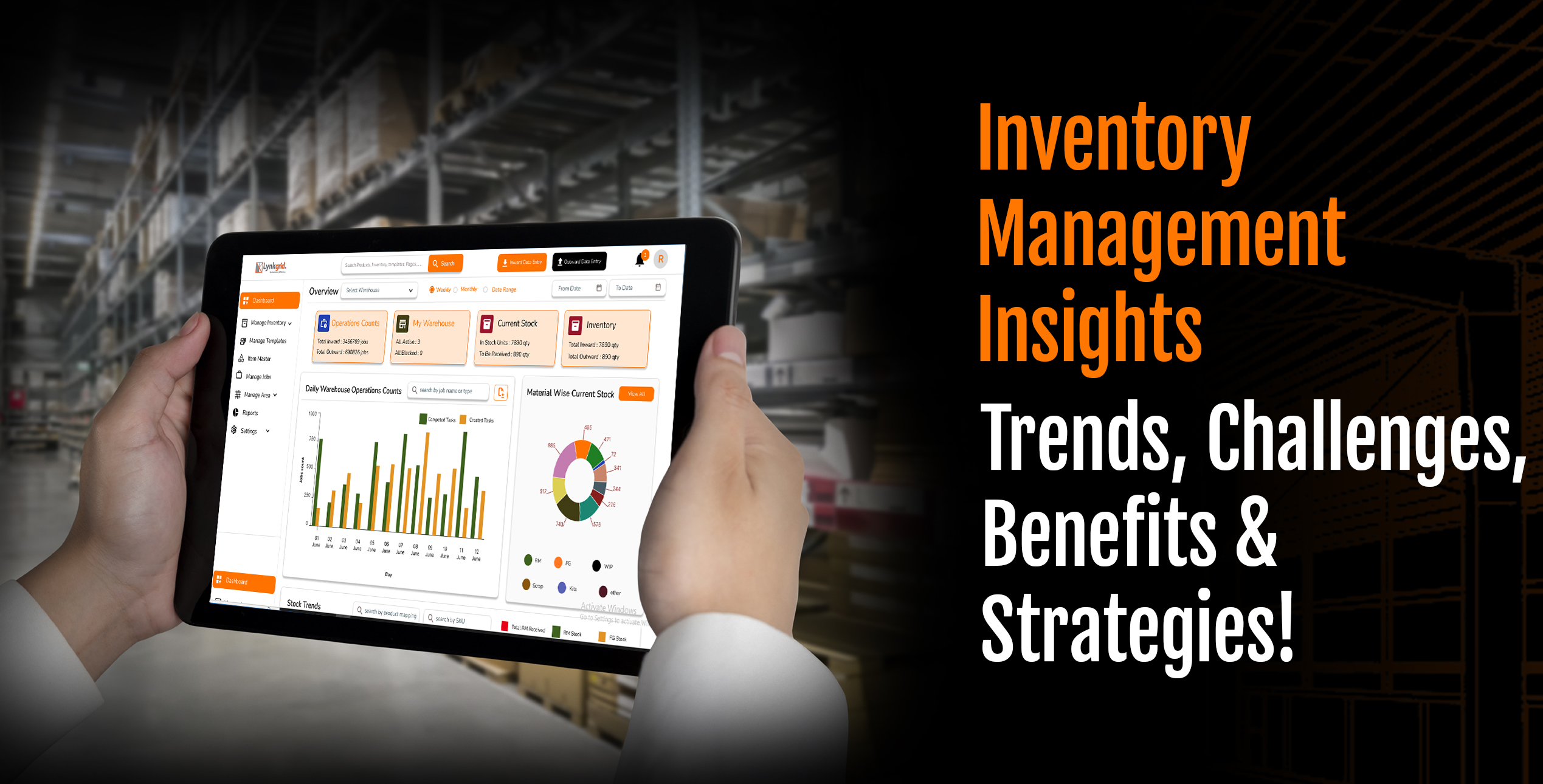
Also read: Latest Inventory Management Insights – Trends, Challenges, Benefits and Strategies!
The Role of Lynkit’s Warehouse Management System (WMS) in Striking the Balance!
A sophisticated Warehouse Management System (WMS) like Lynkgrid WMS can transform warehouse operations by addressing these root causes. Here’s how:
1. Real-Time Inventory Tracking
Utilizing technologies like RFID, barcodes, and IoT sensors, a WMS provides live updates on stock levels.
Impact:
- Ensures accurate stock counts.
- Prevents overstocking through unnecessary replenishments.
- Reduces the risk of running out of stock.
2. Demand-Driven Replenishment
Advanced WMS solutions integrate with demand forecasting tools, using historical trends and real-time sales data for precise inventory management.
Impact:
- Aligns inventory levels with actual demand.
- Minimizes excess stock.
- Mitigates the risk of stockouts.
3. Intelligent Storage Optimization
A WMS employs strategies like ABC analysis to allocate storage based on product demand and value.
Impact:
- Optimizes warehouse space.
- Streamlines retrieval processes.
- Speeds up order fulfillment.
4. Automation of Order Management
From generating pick lists to tracking shipments, a WMS automates critical order management tasks.
Impact:
- Reduces manual errors.
- Accelerates replenishment cycles.
- Improves order accuracy and timeliness.
5. Real-Time Insights and Analytics
With robust reporting and analytics tools, a WMS provides actionable insights into inventory trends, operational bottlenecks, and space utilization.
Impact:
- Enables data-driven decision-making.
- Identifies opportunities for cost reduction and efficiency gains.
Why Balancing Overstocking and Stockouts Matters
Achieving this balance goes beyond managing inventory; it’s about creating a seamless and responsive supply chain. A well-implemented Warehouse Management System (WMS) empowers businesses to:
- Enhance Customer Satisfaction: Consistently meet demand without delays, building trust and loyalty.
- Optimize Costs: Reduce storage expenses, minimize waste, and prevent lost sales.
- Boost Profitability: Improve operational efficiency and inventory turnover, leading to healthier bottom lines.
Conclusion
In today’s fast-paced environment, the stakes are high for achieving the right balance between overstocking and stockouts. Businesses that fail to address these challenges risk operational inefficiencies, dissatisfied customers, and declining profitability.
A Warehouse Management System (WMS) like Lynkgrid provides the tools and intelligence needed to strike this balance effectively. By leveraging real-time data, automation, and advanced analytics, businesses can unlock new levels of efficiency and profitability.
If your warehouse is grappling with the challenges of overstocking or stockouts, it’s time to explore how Lynkgrid WMS can revolutionize your operations. Contact us today to learn more!